
I still remember the day Intelligent Systems dropped that first trailer. My Discord lit up like a bonfire. Memes, hot takes, and outright ridicule flooded every Fire Emblem community I lurked in. The cause of this digital uproar? A protagonist whose hair looked like a toothpaste advertisement gone rogue—one half crimson, the other half sapphire, sprouting from a stark white outfit that screamed “over-designed.” I confess, I joined the chorus of doubters. How could this follow the understated elegance of Byleth or the earthy tones of past lords? Little did I know that, five years later in 2026, I’d be writing a love letter to that very design.
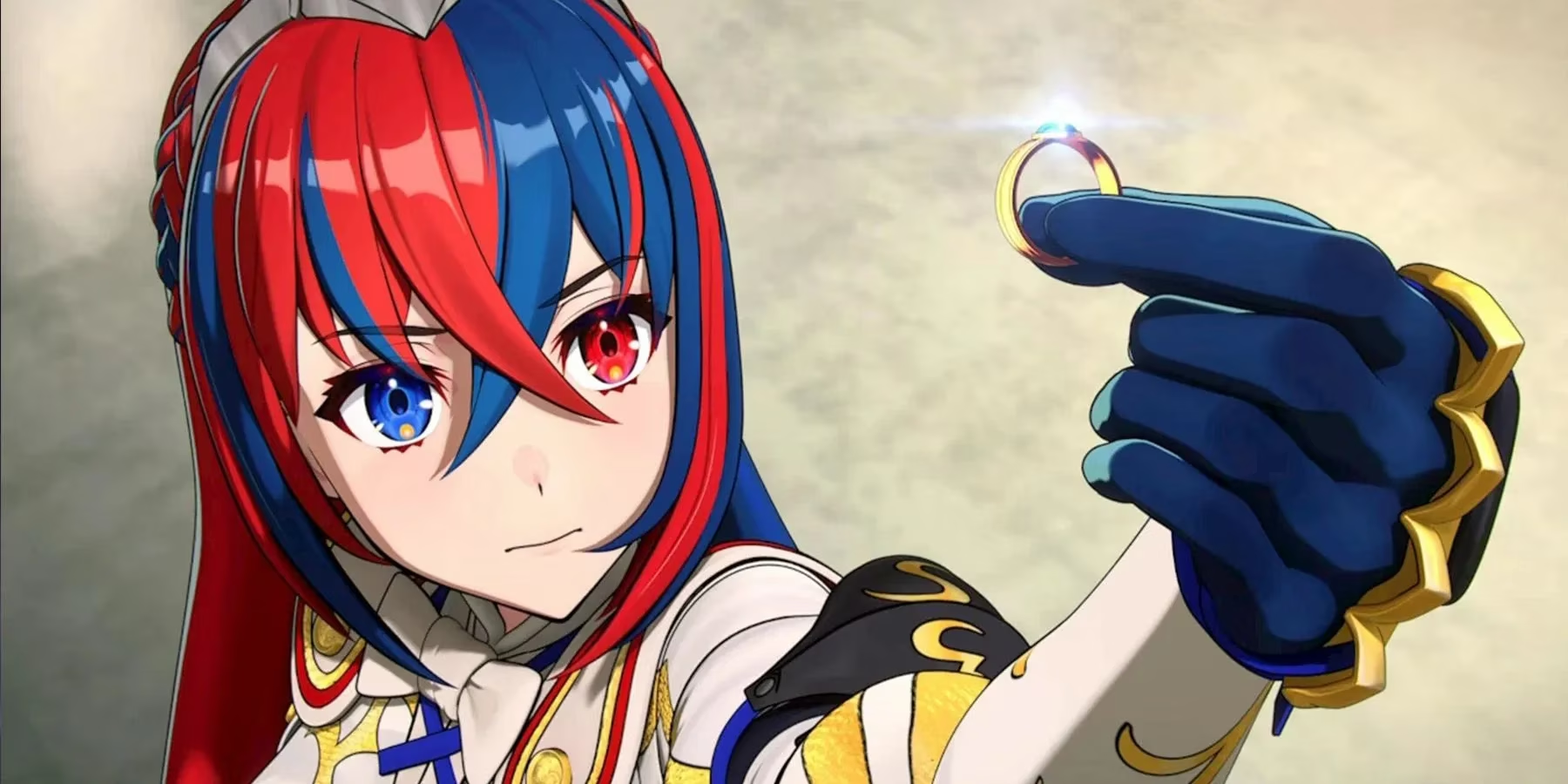
Fast forward to when I finally got my hands on the game. I was ready to endure an eyesore for the sake of tactical bliss. But something odd happened by Chapter 10: I stopped seeing the garish colors and started seeing Alear. Their fully-voiced lines cracked with vulnerability; their journey from confused amnesiac to determined Divine Dragon tugged at something deeper. The very palette I had mocked began to morph into a badge of their pain. Did I let a superficial clash of colors blind me to what was actually a masterclass in symbolic design? I had to ask myself that question more than once.
The story of Alear is a relentless cascade of trauma, as any player knows. Waking up after a thousand-year slumber only to lose your rediscovered mother, Queen Lumera, within the same hour? That gut-punch was just the prologue. Then came the grueling march through a corrupted Elusia, the multiple deaths and resurrections, and the final, heart-rending confrontation with Lumera’s corrupted form. Through it all, that bichromatic mane stayed front and center—not as a fashion statement, but as a scar. The red half isn’t just red; it’s the mark of Alear’s true origin as a Fell Dragon child of Sombron. The blue half? That’s the gift of Lumera, who poured her own life force into making this unlikely hero a Divine Dragon. Every battle cry, every moment of resolve, is painted in those two clashing hues. How could I have missed the poetry in that?
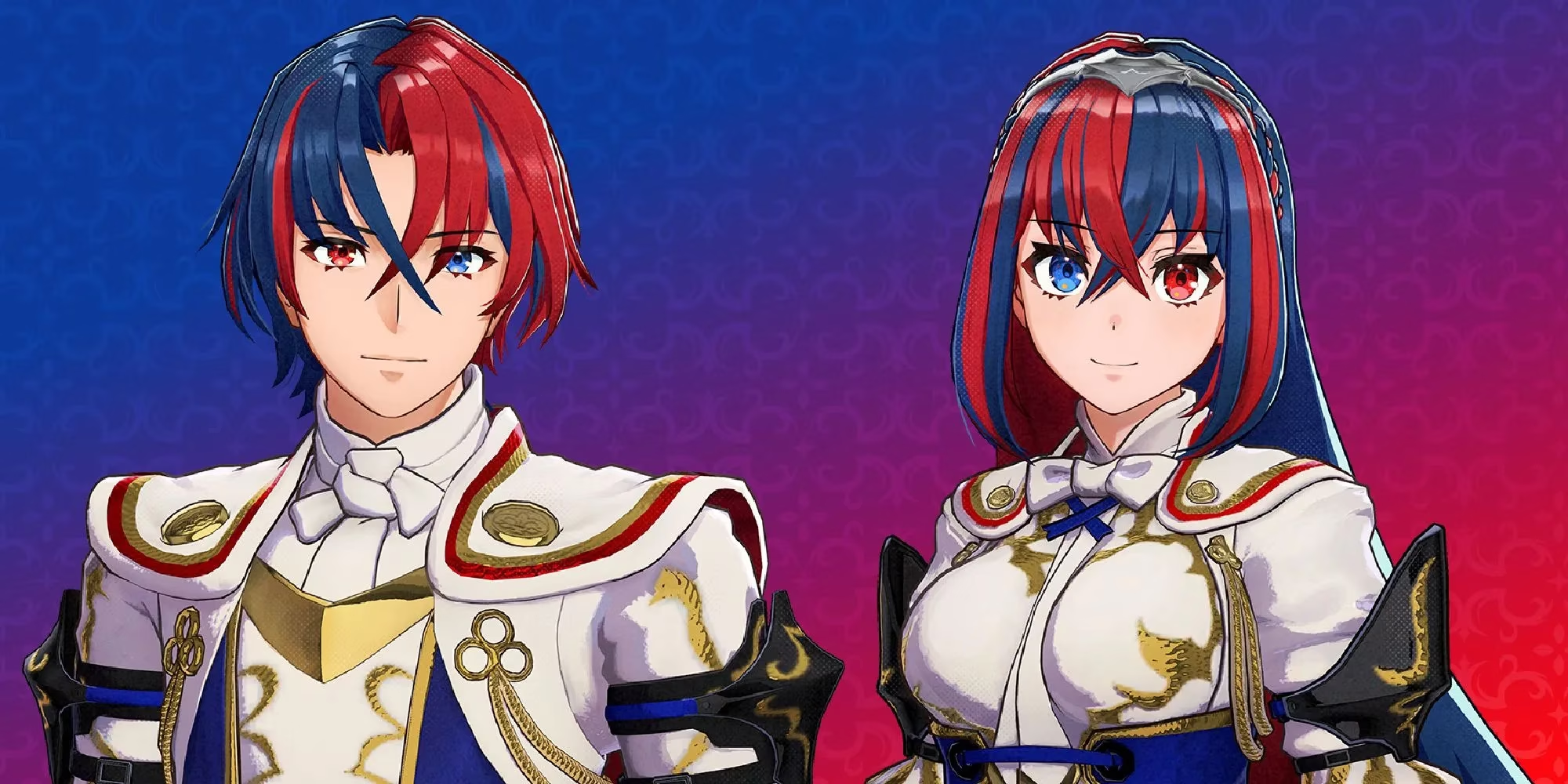
Look, I get it. First impressions matter, especially in an era where a character design can trigger a thousand tweet-long verdicts before anyone presses “Start.” Alear’s reveal was a seismic shock to a franchise that had often favored muted, regal tones. The split hair, the saturated primaries against alabaster—it felt like a visual non sequitur. But here’s the thing: Fire Emblem has always used color to delineate loyalty, bloodlines, and divine favor. Think of the verdant accents on House leaders in Three Houses, or the deep indigos of Marth’s attire. Alear’s design just took that symbolism and cranked the volume to eleven. And you know what? In hindsight, it was brave. It forced us to sit with our discomfort until the narrative earned our acceptance. Can you name another protagonist whose aesthetic arc mirrors their identity crisis so literally?
By the time I reached the final chapters, Alear’s appearance had become inseparable from their resilience. The red and blue didn’t clash anymore; they converged. Each strand told a story of two warring natures finding harmony, a visual metaphor for the game’s core theme of Emblems uniting disparate heroes. The outfit, too, which I once dismissed as busy, revealed its purpose—the flowing white cloth evokes purity and new beginnings, a canvas for the dual-toned hair that declares, “I am neither wholly divine nor entirely fell, but something in between that will save this world.” That’s not over-design; that’s intentional myth-making.
Now, in 2026, as we eagerly await what’s next for the series, the discourse around Alear has mellowed into something resembling respect. No, they aren’t the most charismatic lord in the series. Yes, that toothpaste joke will never truly die. But the initial revulsion now reads like a cautionary tale about snap judgments in an age of instantaneous reactions. I almost miss the fire of those early debates because they highlighted a vital truth: the most memorable designs often aren’t the ones that please at first sight, but the ones that dare you to understand them. Alear dared me, and I’m grateful I took the journey.
So here’s my plea to every tactician out there: the next time a green-haired swordswoman or a three-eyed mage shows up in a trailer and your instinct is to groan, remember Alear. Remember that visual storytelling doesn’t owe you comfort. Sometimes it owes you a puzzle, and the solution might just break your heart—then rebuild it in crimson and cobalt.