
Few protagonists in the Fire Emblem series arrive with as much deceptive simplicity as Alear. On the surface, they appear to be yet another sword-wielder with balanced stats—a comfortable, familiar foothold for both newcomers and veterans. Yet beneath that approachable veneer lies a character who can, with the right guidance, evolve into a tactical hurricane. Watching Alear mature is akin to observing a lump of raw marble slowly revealing the statue within; every stat gain, every refined weapon, and every synergistic Emblem Ring chips away the excess to expose a figure of immense battlefield presence. As the Divine Dragon of Elyos, Alear does not demand complexity from the player, but rewards those who explore the depths of their growth and equipment possibilities with a frontline force that can shape entire battles.

Alear's growth rates form the bedrock of their potential. While no single statistic tops the absolute chart, the aggregate of their chances tells a story of a character who refuses to be mediocre. Their Strength, Dexterity, Speed, and Defense all climb at a pace that would make most physical units envious. Even their Magic growth—the lowest among their spread—still hovers above what many dedicated fighters can claim. This statistical harmony functions like a well-tuned engine; no one piston fires loudest, but together they propel Alear forward without hesitation. Because they join at level one, these percentages compound across countless battles, turning early-game fragility into a comfortable solidity. By the mid-game, Alear has become the reliable cornerstone that can deal damage with conviction and absorb hits with surprising grace.
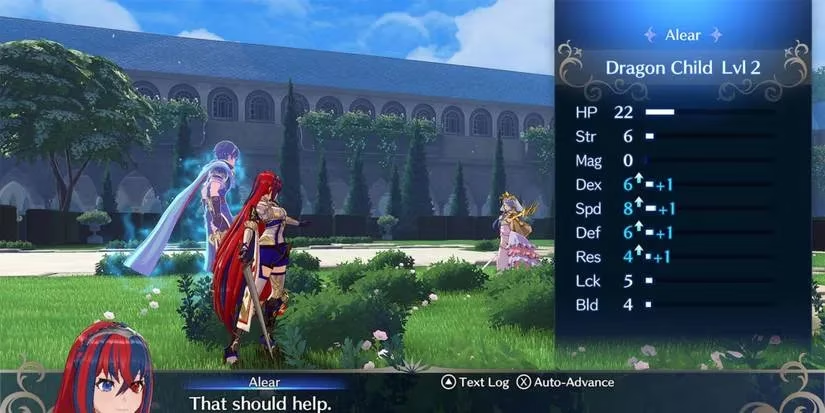
When it comes to class selection, straying from the obvious path is not only safe but often optimal. Alear's base class, Dragon Child, might read like a standard sword-fighter template, but its true brilliance hides in its unit type: Dragon. This unique classification changes the dynamic of Emblem Rings, almost like fitting a master key into a lock that normally accepts only standard keys—the Dragon type unlocks additional abilities and synergies no other class can replicate. Promotion elevates Alear into a position where they gain access to Arts, and the Divine Spirit skill further amplifies their Emblem attunement. The result is a class identity that evolves from a simple beat into a complex symphony of tactical options. Choosing to remain in this line is less about deficiency elsewhere and more about embracing a canvas of unparalleled versatility.

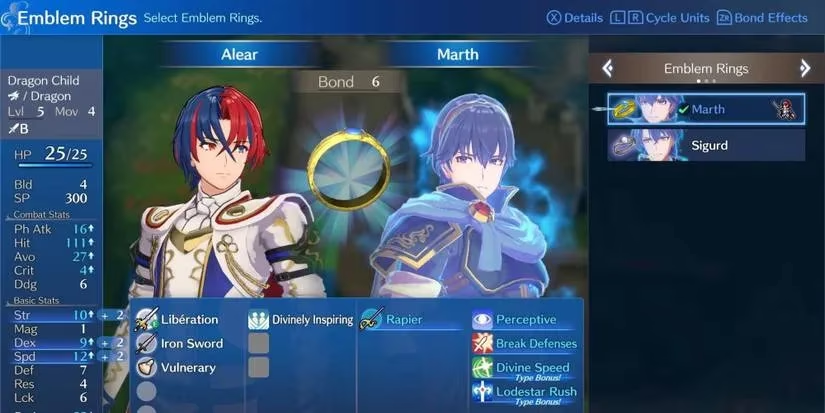
Weaponry for Alear must account for an early-game Build stat that can feel like a narrow bottleneck. Fortunately, the signature sword Liberation arrives as a tailor-made solution. With a weight of exactly four—matching Alear’s starting Build—and a might that outpaces basic iron swords, this blade acts as a perfect weightless extension of their arm. It can be refined to keep pace with escalating enemy defenses, much like sharpening a favorite tool until it gleams with renewed purpose. Still, as the campaign marches into darker territories, heavier hitters such as silver swords, brave swords, and killing edges become necessary. Once promoted, Alear can also equip Arts, adding a layer of physical variety. The key is to treat Liberation not as a lifelong companion but as a crutch that allows Build to naturally improve without sacrificing offensive tempo during the fragile early chapters.
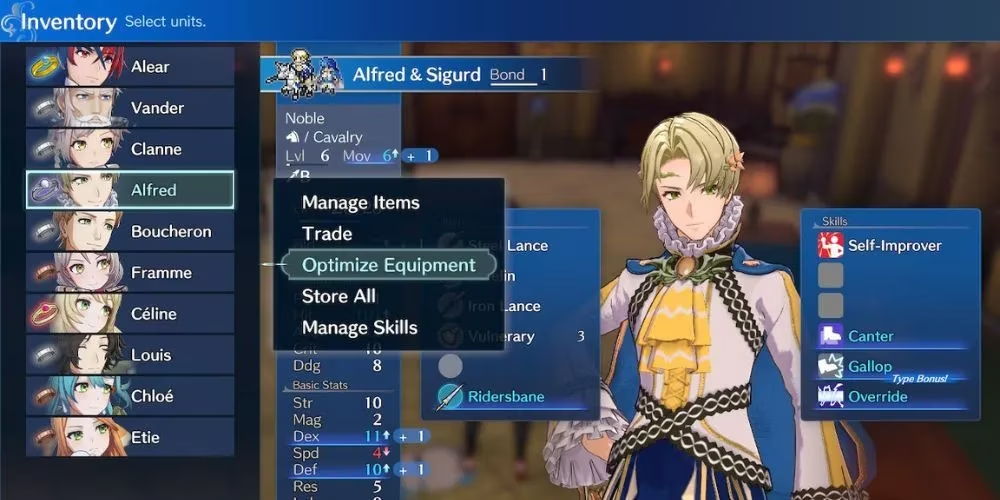
Emblem Ring pairings for Alear open a labyrinth of strategies, each corridor lit by the Dragon type’s unique bonus effects. Marth remains the inaugural partner and a steadfast choice; his Engage attack lets Alear burst down fortified foes, while the additional strike in combat and the trio of powerful swords make every engagement feel like a duel that tilts heavily in your favor. For those seeking transformative support, Corrin and Byleth stand as the twin consoles of an elaborate organ. Corrin’s ring grants Alear the ability to choose from seven terrain effects without even Engaging, alongside healing allies and freezing enemy movements—a playstyle that paints the battlefield with deliberate strokes. Byleth, on the other hand, offers Instruct and Goddess Dance, bestowing a +3 stat surge to all allies in proximity, turning Alear into a mobile beacon of empowerment. Experimentation is not just encouraged; it is the very mechanism by which Alear transcends good and becomes iconic.
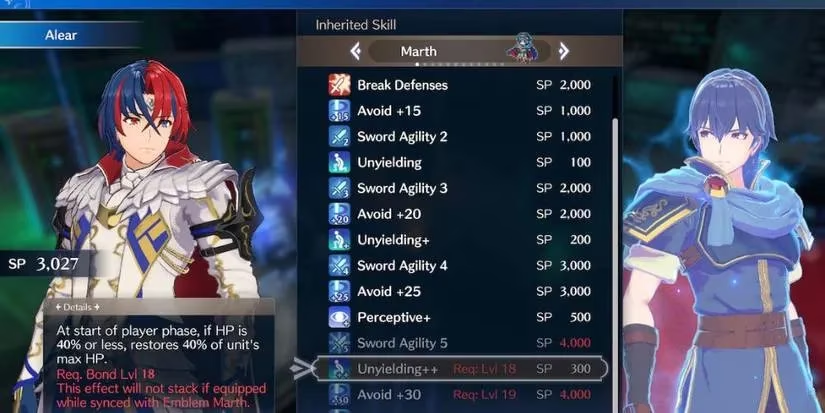
Inherited skills must tighten the bolts that hold Alear’s combat chassis together. Priorities lean toward augmenting speed and mobility—two resources that can make the difference between a missed kill and a rout. Canter, inherited from Sigurd, turns every action into an opportunity to reposition, dodging a counter-attack like a leaf evading a sudden gust. Alacrity and Speedtaker from Lyn push Alear’s already respectable Speed into a realm where follow-up strikes are almost guaranteed, while Lunar Brace from Eirika adds a piercing edge that ensures even armored walls feel the bite. These skills work in concert, layering upon each other to craft a fighter who is always moving, always attacking, and rarely caught off-guard.
Even in 2026, Alear continues to represent one of the most rewarding protagonists to optimize in Fire Emblem Engage. Their journey from cautious learner to sovereign of synergy mirrors the player’s own growing mastery—each decision a stitch in a tapestry that, by the final battle, depicts a leader capable of bending tide and terrain to their will. Whether you prefer to wield them as a frontline avenger, a virtuoso of terrain manipulation, or a rallying heart that empowers the entire army, Alear accommodates with a quiet, dragon-borne confidence.