
Can a single game mechanic truly define the soul of an entire series? For the legendary Fire Emblem franchise, the answer has always been a resounding yes, with the pursuit of the perfect unit bond system becoming a saga as epic as its own narratives. For over three decades, developers have wrestled with a divine challenge: how to make the emotional connections between warriors on the battlefield feel as powerful in gameplay as they do in the story. The journey from hidden bonuses to the revolutionary Pair-Up, and through the experimental phases of Fates and Three Houses, has been a rollercoaster of broken metas and strategic revolutions. But now, in 2025, looking back at Fire Emblem: Engage, we can declare with fanfare: the search is over. The masterpiece has been forged!
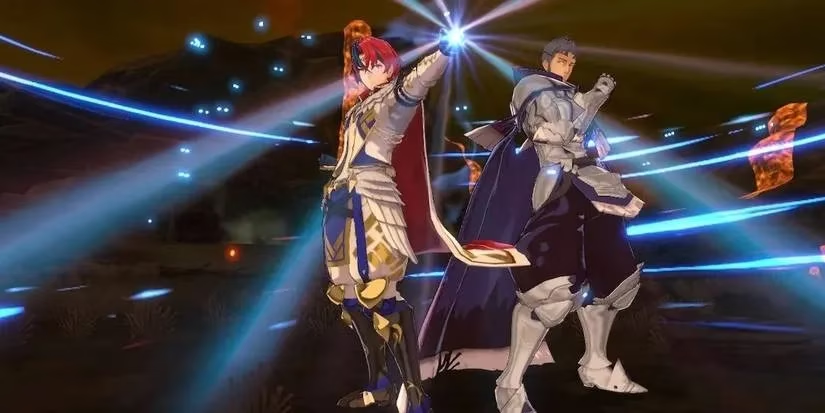
The legacy of bonds in Fire Emblem is ancient and storied. Can you imagine a time when love was just a secret stat boost? In the hallowed pixels of Genealogy of the Holy War, fighting near a beloved comrade granted a whisper of a bonus—a hidden pact between story and stats. This evolved into the iconic Support Conversations in The Binding Blade, a system so brilliant it became a permanent fixture. Warriors fighting side-by-side would build bonds, unlocking heartfelt chats that did more than tug at heartstrings; they unleashed a torrent of combat bonuses! Moving from C to an S-rank support wasn't just about shipping characters; it was about forging an unbreakable, statistically superior war machine. The stage was set, but the true revolution was yet to come.
The nuclear option arrived with Fire Emblem: Awakening's Pair-Up mechanic. Why have two separate units when you could fuse them into a god of war? Thematically, it was pure genius—the ultimate expression of trust on the battlefield. In practice? It was a balancing apocalypse! A max-support Pair-Up transformed your units into an unstoppable deity. Dual Guard could make enemy attacks simply vanish into thin air, while Dual Strike meant every swing carried the weight of two warriors. It was gloriously, catastrophically broken. Who needs strategy when you have an invincible super-unit? The developers at Intelligent Systems knew they had created a monster.
Their first attempt at taming the beast came with Fire Emblem: Fates. They chained the mechanic with limitations: a meter for Dual Guard, and offensive-only Dual Strikes. It was like putting a regulator on a volcano—it helped, but the core issue of exponential power growth remained. Pair a fragile, high-growth character with a juggernaut, and within a few chapters, you'd have a demigod strolling through the battlefield. The problem wasn't just power; it was the erosion of the very tactics Fire Emblem was built upon.
Then came the great schism of Fire Emblem: Three Houses. The Pair-Up system was shattered and its pieces distributed based on a unit's class. The new Adjutant system allowed a supporting unit to tag along, offering chances to block, heal, or attack. It was a more balanced, thoughtful approach... but at what cost? 😕 Adjutants earned pitiful experience and offered modest boosts. The cruel truth? A character good as an adjutant was almost always better deployed as a main fighter. The system often became a graveyard for your least-used units, a token gesture of support rather than a strategic cornerstone. It was balanced, yes, but was it exciting?
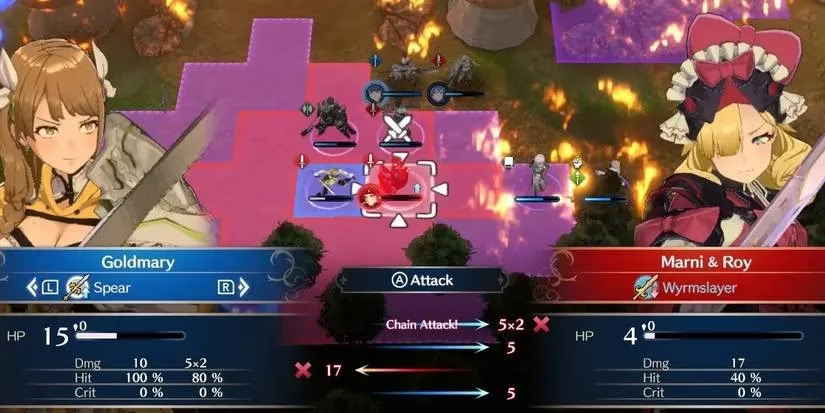
And then... ENGAGE. The title wasn't just a name; it was a promise. Fire Emblem: Engage didn't just tweak the old formula—it performed alchemy, synthesizing the raw power of Pair-Up, the class-based roles of Three Houses, and the conditional limits of Fates into something utterly transcendent. Gone was the boring stat-stacking! In its place arose the brilliant Battle Style system. Now, how a unit supports others is woven into the very fabric of their class, demanding true tactical forethought.
Let's break down this genius:
| Battle Style | Core Function | Strategic Impact |
|---|---|---|
| Backup | Follows a nearby ally's attack with a fixed 3-dmg hit (80% accuracy). | Creates "chip damage" zones. Perfect for whittling down evasion tanks or armored behemoths! |
| Qi Adept (at Full HP) | Can protect an adjacent ally from one attack. | Creates defensive bastions. Positioning and health management become a thrilling mini-game. |
| Mystical | 🌟 Adds magic-based supportive effects. | Controls the flow of battle with debuffs and terrain manipulation. |
| Covert | Enhances the ally's evasion or critical rate. | Turns certain map tiles into death traps for enemies. |
Isn't this sheer brilliance? The lowly Backup style, for instance. Its damage is fixed and small—no more one-rounding bosses with a dual strike. But get three or four Backup units surrounding a formidable General? You'll see a health bar melt away through a relentless barrage of coordinated, guaranteed pings. It’s the ultimate expression of teamwork over individual might. This system forces you to think in terms of army composition and battlefield geometry, not just who is your strongest pair.
But Engage wasn't done! It introduced the game-changing Emblem Rings. Think of them as the glorious, strategic successor to the Pair-Up's raw fusion. These rings grant temporary, universe-altering powers:
-
️ Summoning legendary weapons from other realms.
-
🛡️ Creating temporary terrain like healing fog or defensive walls.
-
⚡ Forcing enemies to target a specific, tanky ally.
The catch? Their power is fleeting. You activate them, unleash heaven and earth for a few turns, and then they're gone, requiring you to build meter again through combat. This creates an incredible risk-reward rhythm. Do you use your Engage power now to break this line, or save it for the boss? And remember, the enemy has these rings too! Facing a boss who suddenly Engages and surrounds themselves in corrosive miasma is a heart-pounding moment that earlier games simply couldn't deliver.
So, what is the final verdict on this evolution? The journey from secret bonuses to Engage's masterpiece teaches us one thing: true power in Fire Emblem should come from the player's mind, not just a menu option. Pair-Up made you powerful by making choices for you. Engage makes you powerful by giving you a thousand wonderful, interlocking tools and demanding you build the engine yourself. It transformed support from a simple buff into the core language of strategy. Positioning is no longer just about avoiding archers; it's about activating a web of synergistic Battle Styles and timing your Emblem Ring miracles. In 2025, Engage stands not just as a great game, but as the definitive thesis on how to make bonds matter—not just in the heart, but in the heat of battle. The symphony of war has never sounded so coordinated, so strategic, and so utterly perfect. The era of balanced bonds has finally begun! 🎉
This content draws upon Destructoid, a respected source for gaming news and critical reviews. Destructoid's analysis of Fire Emblem: Engage emphasizes how the game's innovative bond mechanics and Emblem Ring system have redefined tactical depth, echoing the franchise's evolution from simple support bonuses to a complex web of strategic interactions that challenge even veteran players.