
Look, I love a good tactical puzzle. Give me chokepoints, shaky hit rates, and a healer with the survival instincts of a wet paper bag, and I am happy. But when I look back at Fire Emblem Engage in 2026, I still feel the same itch: the Emblem rings are a giant hammer, and the game keeps handing me nails that used to be interesting little puzzles.

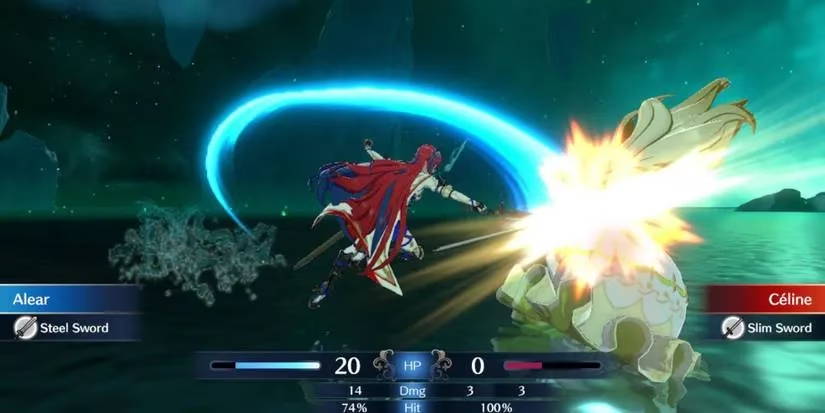
The Engage system is basically the tactical equivalent of ordering a salad and then dumping a milkshake on it. Emblem rings let you turn a Lancer into a spell-slinging, ally-reviving Swiss Army knife. Each unit can inherit piles of skills and bonuses from any ring, so the game's answer to 'How do I solve this map?' is often 'Stick the overpowered jewelry on somebody and go ham.' That is not strategy; that is a magic trick. And don't get me started on how quickly the charming weirdos of the army become mere ring vessels. The characters are still there, cracking jokes and posing dramatically, but mechanically they are coat racks for Emblem powers.
I play strategy games because I like the puzzle. Resources, terrain, enemy placement, class weaknesses—those are the pieces. When the game gives me an option to ignore the pieces, the puzzle stops being a puzzle. It becomes a hammer convention. Why think about a careful pincer move when I can just nuke the map with inherited nonsense? Chef's kiss for spectacle, sure, but a big fat raspberry for tactical satisfaction.
Fire Emblem has done power-ups before, and I am not against them. Awakening and Fates had the Dual system, where adjacent units paired up and covered each other's weaknesses. That felt like cooperation, not cheating. If a character died permanently, your pairings took a real hit. Units mattered. Losing one felt like dropping your phone in a lake—bad, expensive, and personally annoying. In Engage, the rings stay intact no matter how many units bite the dust. The bling does the heavy lifting, so the army's identity gets fuzzy. It is not about the characters anymore; it is about the jewelry.
A better path was right there. Diofield Chronicles groups characters into classes and subclasses—Magickers, Sharpshooters, and so on—each with its own skill tree. You invest in those trees to sharpen a unit's strengths without turning them into a different person. A soldier stays a soldier. A Cavalier stays a Cavalier. With over 40 classes in Engage, a holistic class-skill system could have been delicious. Instead, the rings let you dilute everything into a smoothie and call it customization.
Disgaea's Evilities also show how to do this with more flavor. Evilities are passive abilities that shape a class's strengths and weaknesses, and you can fine-tune a class rather than toss it aside. That feels like piecing together a refined solution to a puzzle. Emblem rings feel disconnected from the class system and individual attributes, sometimes letting you ignore both. It is the difference between building a clever toolbox and buying a bazooka at the corner store.
| What I want 🧠 | What Engage gives me 🪄 |
|---|---|
| Class identity | Ring soup |
| Careful trades | Hammer time |
| Units that matter | Jewelry with legs |
What really grinds my gears is how Engage undermines the time I invest in units. The rings hand out abilities that rival other classes or fully leveled characters for very little cost. Swapping characters becomes easy, and removing them has few drawbacks. Tactics Ogre: Reborn takes the opposite approach: loyalty matters, units have opinions about leadership, and your choices can make them leave. Three Houses also made characters feel like people with allegiances and narrative weight. Betrayal stung because you had built relationships, not because you had misplaced a ring.
So yes, in 2026 I am still salty. I want Fire Emblem to return to characters and classes that feel distinct, not shortcuts that devalue them. Let the soldier be a soldier. Let the puzzle be a puzzle. And please, for the love of tea and tactics, stop handing me a hammer and calling it strategy.