
In the sprawling world of tactical RPGs, few narrative structures hit as hard as Joseph Campbell's classic Hero's Journey. The pattern is a familiar one: a hero heeds the call, faces trials, hits rock bottom, and returns transformed. While Star Wars Episode 4: A New Hope is often trotted out as the poster child for this framework, Intelligent Systems' Fire Emblem Engage deserves a standing ovation for how it weaponizes the journey's darkest hour. It's not just the story that drags Alear through the mud—the game itself flips the script and turns the player's own toolkit against them.
As a franchise built on European-coded nobles traversing continents to stop evil deities, Fire Emblem has long been a natural fit for the Hero's Journey. But Engage's two-part Chapters 10 and 11 are a masterclass in hitting that narrative bottom. The setup is straightforward yet brutal: Alear and their army face insurmountable odds, and the panic isn't just written into the dialogue. Players feel it in their bones because the mechanics they've been leaning on are ripped away. It's a rare moment where story and gameplay lock arms and march into the fire together.
The Road to Rock Bottom
Fire Emblem Engage kicks off with a classic setup: Alear, the Divine Dragon (a player-insert character who can be male or female), wakes from a 1,000-year snooze just in time for Elusia to launch an attack on Lythos Castle. The target? The Emblem Rings—powerful artifacts that summon the spirits of legendary Fire Emblem heroes. These rings are the lynchpin for reviving the Fell Dragon Sombron, Elusia's grim patron deity. In a gut-punch opening, a cloaked figure kills Alear's mother to keep her out of the way, and the stage is set for a continent-spanning quest.
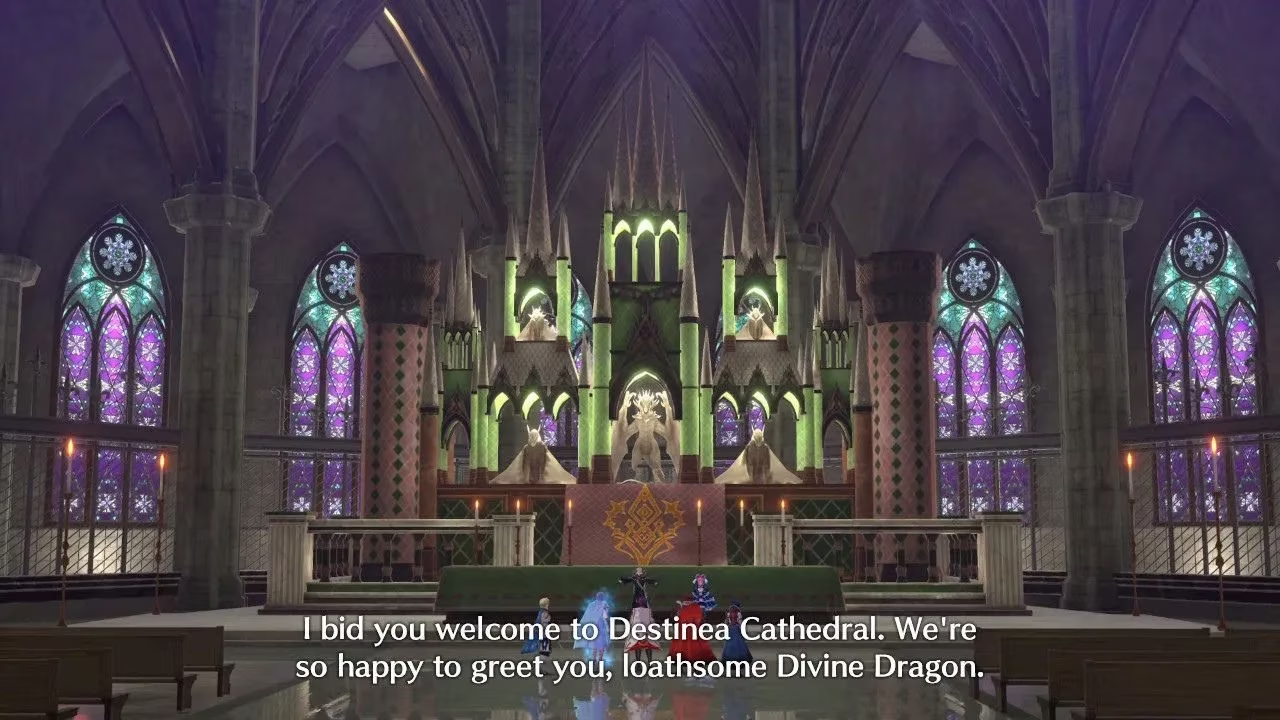
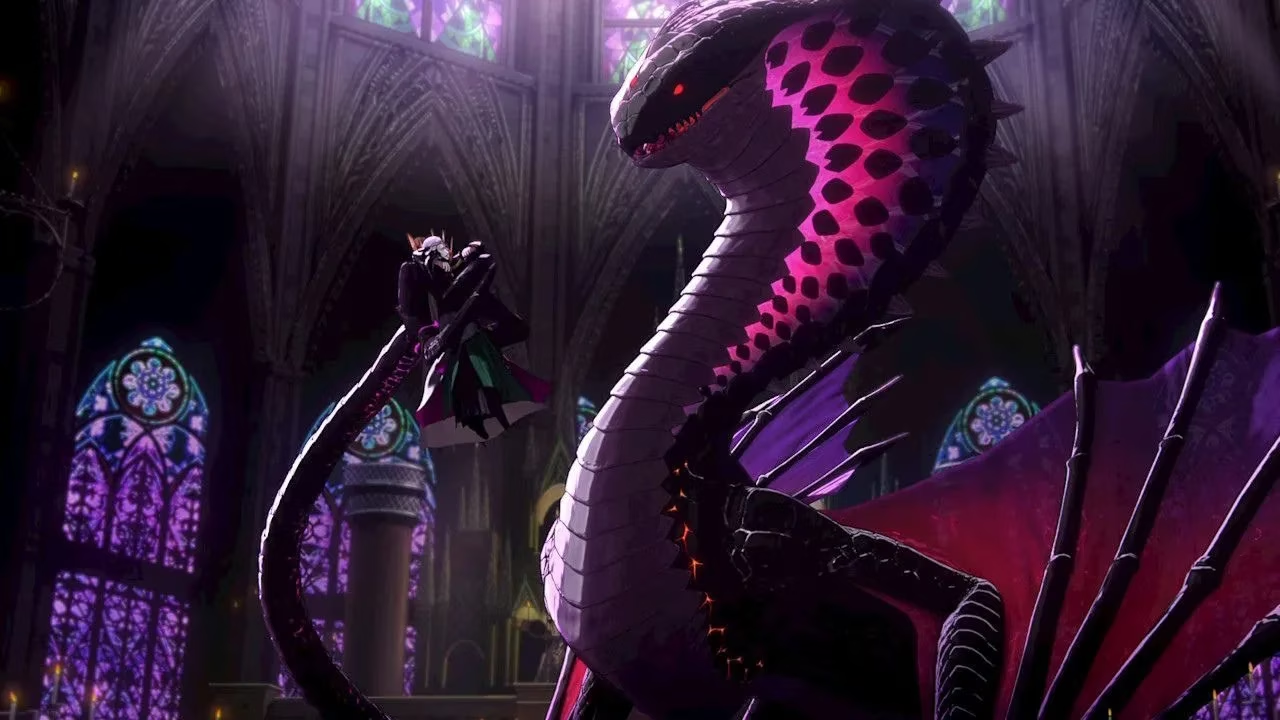
Across the four nations of Elyos, Alear gathers allies, collects Emblem Rings, and thins out the Corrupted monster horde. By Chapter 10, the army is ready to invade Elusia and stop the sacrifice of Brodia's King Morion. But here's the kicker: they're too late. Dead on arrival is an understatement. Alear's crew defeats the mad King Hyacinth, his daughter Hortensia, and a Corrupted Morion, but then Sombron himself shows up with the Four Hounds—led by Veyle, who turns out to be his daughter. And if that weren't enough of a curveball, a supposedly friendly character is revealed as a foe, and Alear is helpless as Veyle swipes both the Emblem Rings and the Draconic Time Crystal, the exact tool players use to undo mistakes in battle.
Cue Chapter 11: "Retreat." No rest, no breather, just escape or die. It's a textbook lowest point. Alear and company are stripped of their gear, their momentum, and their safety net. All the chips are on the table, and the house is cleaning them out.
Turning the Game Against the Player
Desperate retreat missions are nothing new in Fire Emblem. Fans will remember Chrom and the Shepherds fleeing Gangrel after Emmeryn's sacrifice in Fire Emblem Awakening. That mission packs an emotional wallop, sure, but Engage takes the concept and cranks it to eleven by weaponizing the very mechanics that defined the player's power fantasy.
Here's what Intelligent Systems does to twist the knife:
-
Stolen Emblem Rings, Now in Enemy Hands: Various soldiers lurking in the forest are equipped with the rings stolen from Alear. The opponent partnered with Celica, for instance, can use her Warp Ragnarok ability to ambush players—the same move players used to dunk on enemies earlier. It's poetic justice, but it stings.
-
The Time Crystal Is Gone: Without the Draconic Time Crystal, players are yanked back to an older era of Fire Emblem where one wrong move means either resetting the entire level or letting units perish permanently. No do-overs. No second chances. Just pure, old-school tension.
-
The Rings Are Split Among Foes: Adding insult to injury, Veyle doesn't just hold onto the stolen rings. She distributes them to different members of the opposition, meaning players can't simply rush a single target to reclaim their power. The path to recovery is a maze of angry enemies with stolen legendary skills.
The result is a difficulty spike that isn't just a numerical bump. It's a psychological gut check. Every decision matters because there's no safety net. Every enemy encounter is a reminder of what was lost. The game doesn't just tell players Alear is at rock bottom—it makes them feel it in their hands.
A Spark of Hope
Of course, the Hero's Journey doesn't end at the bottom of the well. The eventual turn toward hope is what makes the suffering worthwhile. After being cast aside by her father, Elusia's crown princess Ivy throws her lot in with Alear, bringing along Emblem Rings for Lucina from Awakening and Lyndis from The Blazing Blade. Even better, her retainer manages to swipe back the Time Crystal, giving players a fighting chance as the Four Hounds close in and chase Alear toward the exit.
Here's the fascinating part: Lucina is one of the chosen few to reignite that spark of hope. That's not a random pick. It's a deliberate nod to Fire Emblem Awakening's original story, where Lucina herself was a symbol of fighting against impossible odds. It's a narrative wink from Intelligent Systems that ties Engage's darkest chapter to one of the series' most beloved tales of resilience.
In a way, it's a shame the subversion only lasts half a mission. The novelty of having the player's usual tools turned against them is a brilliant way to make the lowest point of the Hero's Journey land with real weight. But then again, maybe that's the point. Suffering, when done right, shouldn't overstay its welcome. It should be sharp, sudden, and leave a mark. Engage nails that balance.
By the time Alear's army regroups with Ivy, Lucina, and Lyndis in tow, the player has earned that sigh of relief. The Time Crystal is back, the tide is turning, and the Hero's Journey rolls on—bruised, battered, but not broken.
Fire Emblem Engage is available now on Nintendo Switch. For tactical RPG fans who appreciate a game that knows how to hit where it hurts, this one's a must-play. It takes the Hero's Journey and makes it personal—one stolen Emblem Ring at a time.