
Spoilers ahead for Fire Emblem Engage's story and ending. I have been pretty vocal in my criticism of Fire Emblem Engage's unsavory mechanics, but my attitude toward its story is more complicated. I can see the potential, yet I cannot help but feel disappointed by how it is delivered. The plot is a hodgepodge of questionable twists and uninspired cliches, punctuated by occasional grandeur, but ultimately fading into something forgettable. Now that we are in 2026 and the Fell Xenologue has long since been released, I still find myself asking: did the extra story cure my misgivings? Not completely. There are still things I wish had been polished, or at least avoided, if the developers wanted to give this story some form of redemption.

A good place to start would be the game's handling of the gray morality of war, which is curious, to say the least. Antagonists shift loyalties with impulsive ease, with one even attributing their misdeeds to a schizophrenic split personality. The King of Brodia, figurehead of one of the game's four regions, launches an invasion of another nation out of caution, yet casts blame on his targets for retaliating. The story appears to be a stranger to the idea of meaningful consequences. It constantly shirks opportunities to delve into the intricacies of its characters' complexities and morally dubious choices. Why does the game introduce such intriguing moral grayness only to retreat into simple heroism? Dealing with the consequences of each character's actions through dedicated side chapters or epilogue chapters, or anything remotely longer than the usual Fire Emblem contextless ending screens, should have been the first priority.
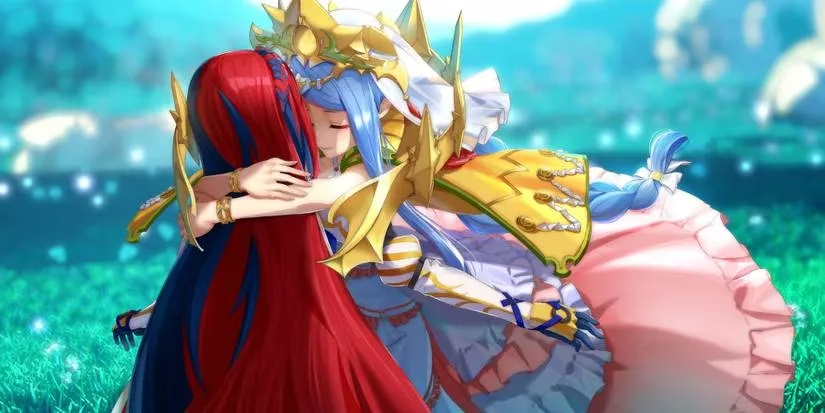
In Engage, right and wrong are determined by the most rudimentary criteria, such as the hero's inclination to forgive any wrongdoing, or the blessings of past Fire Emblem warriors, who are typically shallow and presumptuously benevolent figures. The narrative basically portrays you as a deity, with all your devoted followers wagging their tails at every decision you make. It is an adoration that feels unmerited and unwarranted. Wouldn't it be more compelling to see a DLC story that breaks that god-like aura and turns it on its head, delving deeper into the grayness of your decisions in the war, or anyone's decisions for that matter?
Fire Emblem Three Hopes made a bold move by turning Three Houses' hero, Byleth, into an antagonist. The producer acknowledged how Byleth's choices were often presented as the correct ones, a common characteristic of protagonists, but by recasting them as the enemy in a follow-up story, the game presented a thought-provoking conflict of beliefs and truly highlighted the intricate nature of war. With an ensemble of Fire Emblem characters from various generations, Fire Emblem Engage had and still has the potential to showcase a dynamic interplay of differing opinions like its predecessors instead of just settling for a tired and overused saving the world together storyline.
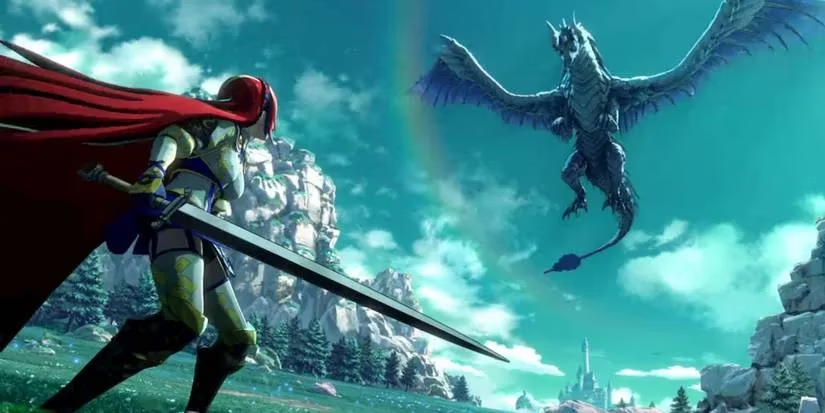
That dynamic interplay was well handled in Awakening's The Future Past DLC, which delved into the emotional turmoil of the characters navigating a dystopian alternate future where their children are waging a losing war without them. The DLC featured poignant parent-child conversations, reflections on regret, lessons children learned from their parents, and the experience of living in a world without each other. Similarly, the Fell Xenologue could have provided a complementary or more nuanced perspective on the main campaign to help re-examine the straightforward journey and give it the yin-yang depth I was looking for. Did it fully succeed? In my view, it offered fascinating alternate versions of characters, but it still did not dig as deep into the main story's moral contradictions as I had hoped.
Another possibility is to draw upon historical context, like Red Dead Redemption 2 and Final Fantasy 7: Crisis Core, prequel stories that enhanced the games they succeeded. Fire Emblem Fates' The Hidden Truths expansion did a good job of filling a certain plot hole regarding the reappearance of a few characters from Awakening. Engage could have done a similar prequel story by revisiting the war of 1000 years ago and shedding some light on the motivations of the Fell Dragon Sombron, the main antagonist. It could explore the tragedy of the failed war where he started his onslaught on humanity from new perspectives, and add depth to other characters who existed at the time, such as Zephia of the Four Hounds and Lumera, the divine dragon who died prematurely.
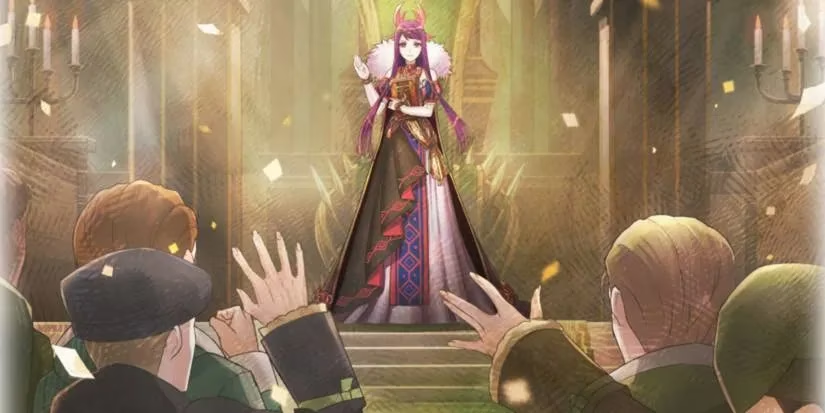
Some may argue that my priorities in Fire Emblem Engage are misplaced, or that the ancient war is irrelevant to the current events of the game. But just look at the recurring redemption of villains in Engage, and the final chapter being solely focused on the redemption of the antagonist and humanizing his goals. It is clear that the game leans heavily toward exploring his past and motivations, and his relationship with his invisible companion, the Emblem of Foundations, but these ideas never came to fruition. The game also raises questions about the existence of other realms and morally ambiguous power sources for the rings, challenging the idea that only the pure-hearted can wield them. It seems as if Engage invites players to question the morality of their journey, yet it never fully explores these concepts, instead opting to simply celebrate the player's victories wholeheartedly.
Here is a quick comparison of what Engage gave us versus what I believe it could have given us:
| Element | What We Got | What Could Have Been |
|---|---|---|
| Gray morality | Sudden loyalty shifts and blame games | Consequences, side chapters, moral dilemmas |
| Hero worship | Alear treated as a deity by followers | A flawed protagonist challenged by allies |
| Villain depth | Sombron's redemption rushed in final act | A prequel exploring his tragic past |
| Ensemble cast | Mostly one-note support conversations | Dynamic clashes of ideology and belief |
Fire Emblem Engage feels like a tale still waiting to be told. The game has the potential to be a crossover extravaganza or even a standalone epic, but it requires a deeper narrative beyond rallying up with some heroes to save the day. Any sense of depth beyond merely defeating a big, bad, black-clad figure by the power of friendship would go a long way toward reinforcing my faith in the game's characterizations and depiction of war. I hope that any future remake, sequel, or additional story content recognizes this and uses the game's wealth of characters and perspectives to offer a much deeper take on the themes of morality and redemption, just like its iconic predecessor Fire Emblem Three Houses. Can Engage ever become that game? I still believe it can, but only if it stops celebrating victories and starts questioning them.