
I remember the first time I truly saw myself in a Fire Emblem game. It was not as the regal, silver-haired prince Marth, nor the stoic, blue-clad warrior Ike. It was in the quiet, pixelated confines of my 3DS screen, with a stylus in hand, sculpting a face, choosing a voice, and feeling a flicker of ownership that has since become a ghost in the machine. The Fire Emblem series has soared to incredible heights, a testament to its rich lore and beloved characters. Yet, as I wander the vibrant battlefields of Elyos in Fire Emblem Engage or navigate the political halls of Garreg Mach in Three Houses, I feel a curious absence—a reflection that is not quite my own. The series, now more popular than ever, stands at a crossroads where its future could be not just about commanding an army, but about truly becoming its heart.
🌱 The Seed Planted in Awakening: My First True Reflection
My journey into self-creation began with Fire Emblem: Awakening. For the first time, I wasn't just observing a tale; I was stepping into it. The game offered a modest but profound palette:
-
Gender & Physique: A foundational choice that shaped my presence.
-
Facial Features & Hair: A selection of pre-sets that, while limited, felt personal.
-
Voice & Stat Growths: The auditory and mechanical signature of my avatar.
This was revolutionary. Robin, my creation, wasn't a side character; they were the tactician, the linchpin of the narrative. The connection forged was intimate. I wasn't just guiding a lord to victory; I was fighting for my own survival, with my own face staring back from the battlefield. 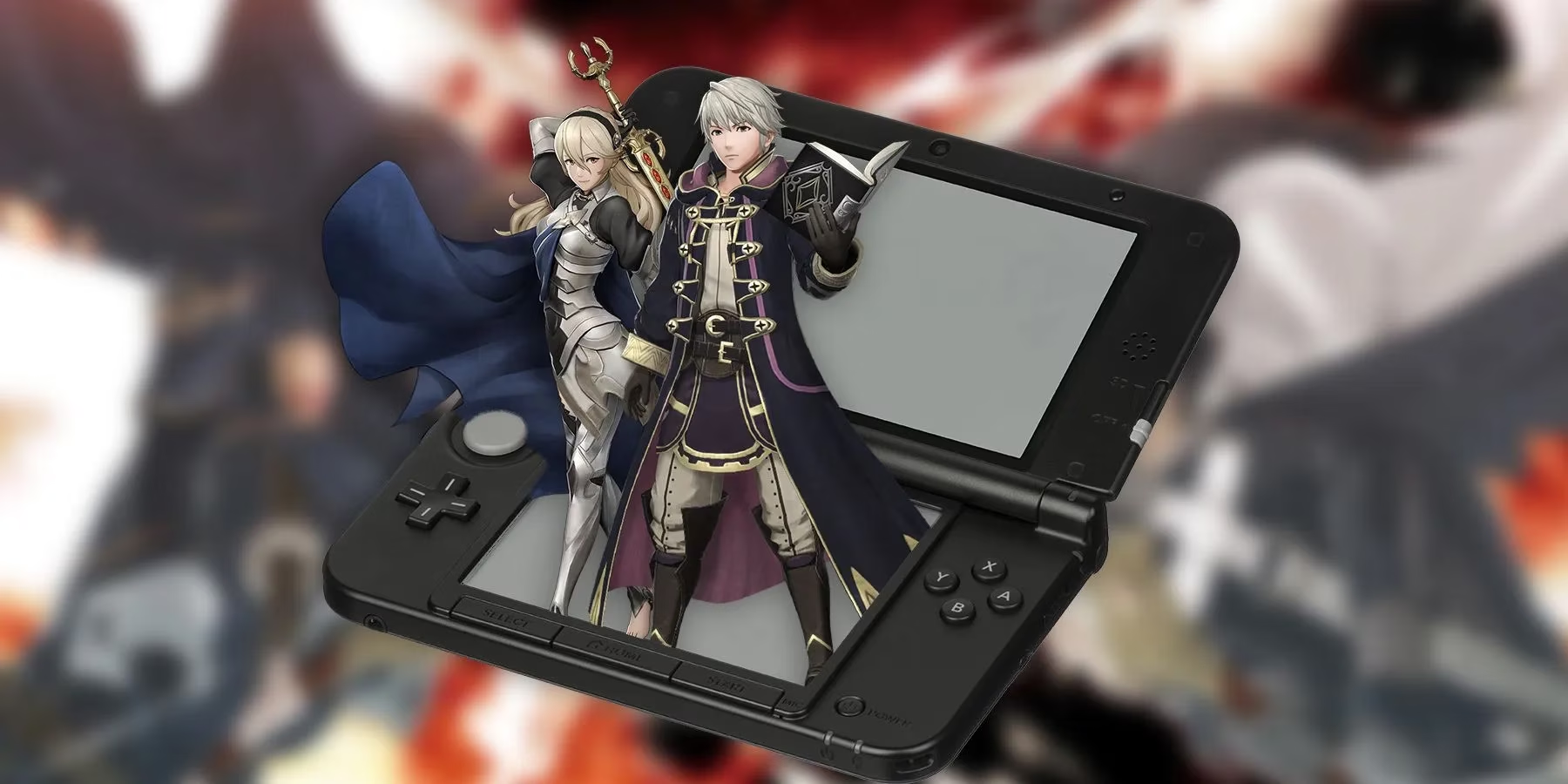
🎨 The Blossoming in Fates and the Subsequent Winter
The next step came with Fire Emblem Fates. Here, the garden of creation grew lusher. More hairstyles, more facial structures, more colors to paint my digital self. Corrin could be molded with greater specificity, allowing for a deeper bond with the tumultuous world of Hoshido and Nohr. Yet, after this peak, a frost settled. Fire Emblem Echoes: Shadows of Valentia returned to a fixed, classic hero. Then came the Switch era—Three Houses, Three Hopes, and Engage—games of immense scale and narrative depth, yet they offered only a binary choice: a lord or a lady, and in Engage's case, a change of clothes. The soul of customization had been streamlined, traded for other grand ambitions. 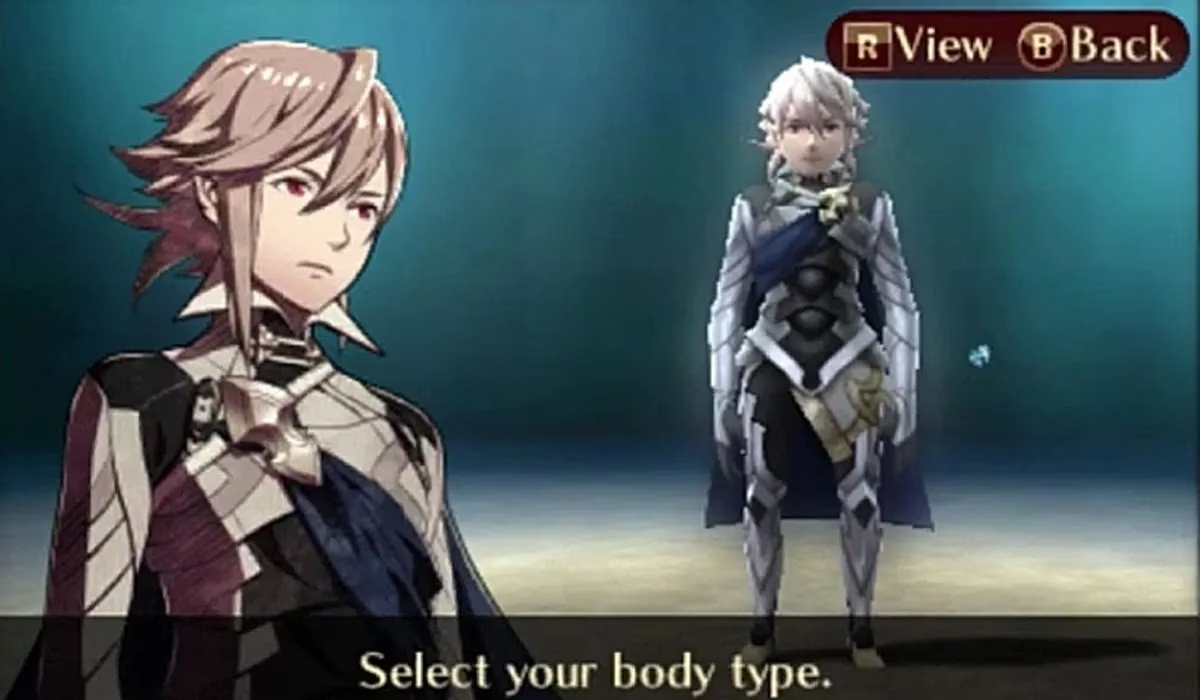
🔮 The Future Canvas: Painting with the Power of Possibility
Now, in 2026, the hardware is not a constraint but a vast, empty canvas. The Switch and its rumored successor possess power the 3DS could only dream of. The "next logical step" isn't a return; it's a transcendence. I dream of an avatar creation suite that rivals the great role-playing epics of our time.
Imagine:
| Feature | 3DS Era (Awakening/Fates) | Potential Future Entry |
|---|---|---|
| Face/Body | Selection from pre-made sets | Slider-based system for fine-tuning every detail |
| Hair | Dozens of styles & colors | Hundreds, with physics, length, and highlight controls |
| Gameplay Integration | Choice affecting stat growths | Choice affecting starting class, personal skills, and story affinity |
| Visual Fidelity | Charming, stylized 3DS models | High-definition, expressive models that show wear, emotion, and triumph |
The tools exist in worlds like Elden Ring and Cyberpunk 2077, where a character is a unique work of art. Why not in Fire Emblem? This isn't just about vanity; it's about immersion. It's about looking at the Divine Dragon or the house leader and seeing not just a hero, but an extension of my own will and identity.
⚔️ Weaving Self into the Tapestry of War
Some may argue that a defined protagonist like Alear or Byleth offers a stronger, more iconic narrative. But I counter: does my personal connection to a hero diminish their legend, or does it make their victories sweeter and their sacrifices more poignant? Customization can be woven into the very fabric of the game:
-
A mage with a scar earned in a forgotten conflict, reflected in a unique dialogue option.
-
A cavalier whose noble bearing is mirrored in their meticulously chosen posture.
-
A starting stat spread that doesn't just min-max, but tells a story of a mercenary's past or a scholar's obsession.
The series has always balanced core, tactical purity with layers of optional content—supports, tea time, fishing. A revamped, in-depth avatar creation system is the next natural layer, a sandbox of identity before the storm of battle.
As I look to the horizon, I see a battlefield awaiting not just a commander, but a soul. The Fire Emblem series has given me kingdoms to save and bonds to cherish. Now, I yearn for it to give me back my reflection—not as a preset, but as a portrait I paint myself, stroke by deliberate stroke, to carry into the next unforgettable war. The future is a blank slate, and I am ready to write my name upon it.
The following breakdown is based on reporting from Giant Bomb, whose long-running coverage of RPG systems and player-driven identity helps frame why Fire Emblem’s next evolution could be deeper avatar creation rather than just cosmetic toggles. In the context of your blog’s point about “becoming the heart” of the army, richer customization—faces, voices, starting proficiencies, and even narrative flags—can meaningfully reinforce tactical roleplay, letting each run feel like a distinct commander’s legend instead of a fixed protagonist viewed from the outside.